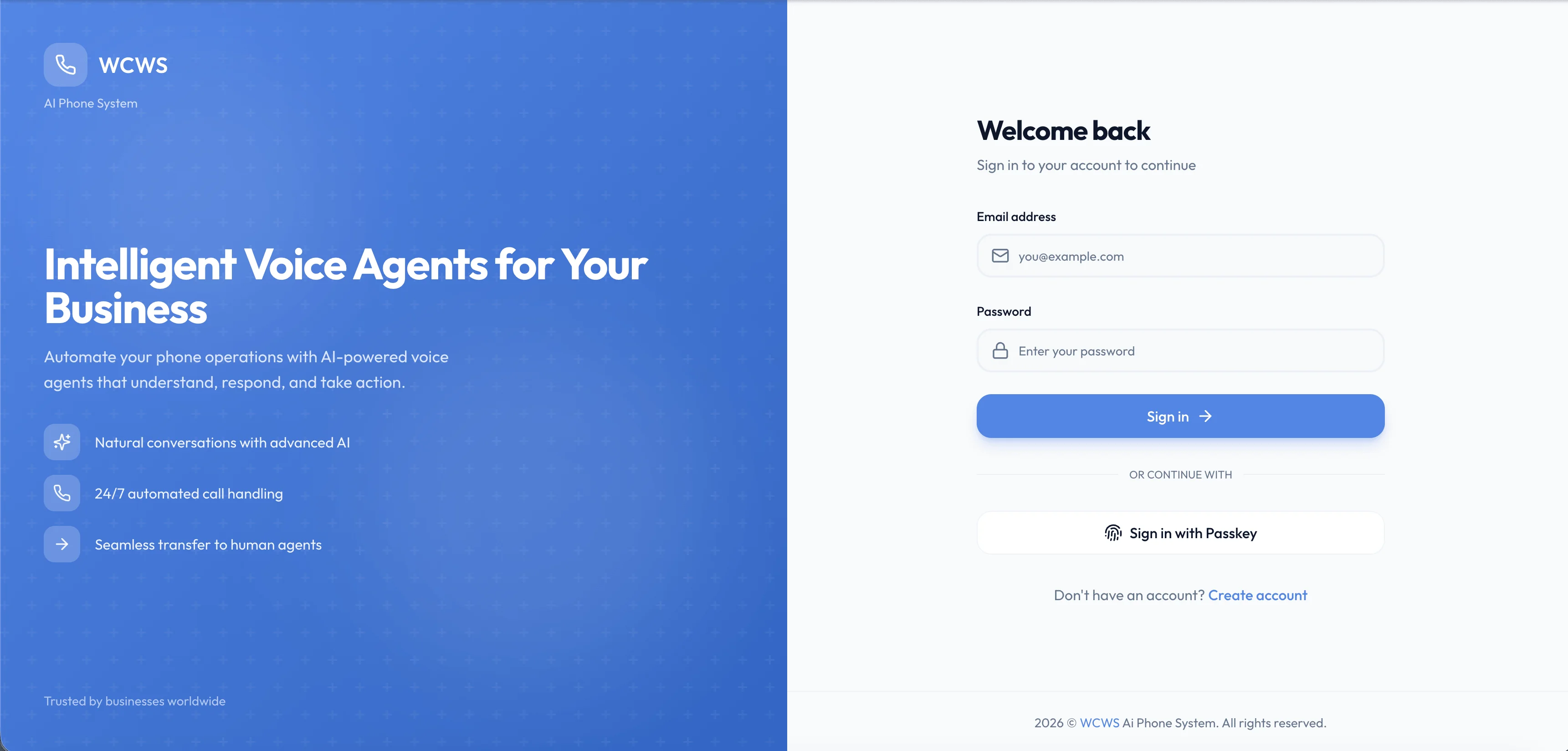
Imagine hiring a phone agent who never calls in sick, never puts a customer on hold for 20 minutes, remembers every caller they've ever spoken to, and gives perfect answers about your products at 3 AM on a Sunday.
That's not a fantasy anymore. I built it — and in this post, I'm going to explain exactly what it does, how it works for businesses, and why it's different from the robotic phone trees you've probably already hung up on.
What Is an AI Phone Agent and Why Does It Matter?
An AI phone agent is a conversational voice system powered by artificial intelligence. Unlike old-school automated phone menus that force you to press 1 for billing and 2 for support, an AI phone agent actually listens to what you say, understands what you mean, and responds like a real person.
Businesses of all sizes lose customers every day because:
-
Calls go unanswered outside business hours
-
Hold times are too long and people hang up
-
Human agents give inconsistent answers
-
Scaling a phone team is expensive and slow
An AI phone agent solves all four of those problems at once. It's available 24 hours a day, 7 days a week, answers instantly, stays on-message every single time, and scales from handling 1 call to 1,000 calls without hiring a single new person.
What I Built: A Complete AI Phone Agent Platform
The platform I created lets any business deploy their own intelligent phone agent — one that's trained on their specific products, services, and company information. It's not a generic chatbot. It's a purpose-built phone agent that knows your business inside and out.
Here's the big picture: you set up a campaign, give the agent a personality and a knowledge base, connect it to a phone number, and it starts handling calls. That's it.
How the AI Phone Agent Platform Works
Setting Up Your AI Phone Agent (Campaigns)
Every AI phone agent lives inside what I call a campaign — a self-contained configuration that defines how the agent behaves. When you create a campaign, you decide:
What kind of calls it handles. The agent can receive incoming calls from your customers, make outgoing calls to your contact list, or do both. A customer service team might use inbound-only. A sales team running a follow-up drive would use outbound. A business that does both can run a hybrid campaign.
How it sounds and speaks. You write a brief description of how you want the agent to come across — friendly and casual, or professional and formal. You pick a voice. You set a greeting. The agent introduces itself and gets straight to helping the caller.
What it knows. This is where the magic happens. You upload your company documents — product guides, FAQs, pricing sheets, policies — and the agent learns from them. It answers questions based on your actual content, not generic AI guesswork.
What to do in special situations. Should it transfer the call to a human agent if the caller is upset? Should it offer to schedule a callback? Should it take a message? You configure all of that upfront.
Campaigns go through a simple lifecycle — you build them in Draft mode, switch them Active when ready, Pause them if needed, and Archive them when they're done. Each campaign gets its own dedicated phone number.
How the AI Listens and Responds in Real Time
This is the part that impresses people most. When someone calls, the conversation feels natural — not like talking to a machine. That's because I engineered the system to respond in under half a second (500 milliseconds). For context, a normal human conversation pause is about 200–300 milliseconds. The AI keeps up.
Here's what happens the moment a call connects:
Step 1 — The AI listens. As the caller speaks, their voice is instantly converted into text. This transcription happens in less than 300 milliseconds.
Step 2 — The AI understands. The text of what the caller said gets sent to the AI brain (the same kind of large language model that powers tools like ChatGPT or Claude). At the same time, the system searches the campaign's knowledge base to find any relevant information — like the answer to a product question hiding inside a document you uploaded.
Step 3 — The AI responds. The AI composes a response using both its intelligence and your specific company information, then converts that response back into spoken audio. That audio starts playing back to the caller — all within half a second of them finishing their sentence.
The result is a conversation that flows naturally, where the AI sounds confident, gives accurate answers, and keeps the caller engaged.
The Knowledge Base: Teaching Your AI Agent About Your Business
One of the most powerful features of the platform is the knowledge base. This is what separates a smart AI phone agent from a dumb script reader.
Here's how it works: you upload documents about your business. Anything you'd want a new employee to read on their first day. Product catalogs, return policies, service descriptions, frequently asked questions, how-to guides — whatever your customers ask about most.
The system reads those documents, breaks them into small, searchable pieces, and stores them in a way that lets the AI instantly find the right information during a live call. When a caller asks "Do you carry the XL version of the blue widget?" the agent searches its knowledge base in real time, finds the relevant product information, and answers accurately.
This happens invisibly, in the background, while the conversation is flowing. The caller never knows the agent just searched a database — it just sounds like the agent knows your products really well.
Accepted document types include PDFs, Word documents, spreadsheets, plain text files, and web content.
Why this matters: Most AI systems hallucinate — they make up answers that sound plausible but are wrong. By grounding your AI agent in your actual documents, the answers it gives are accurate. If the information isn't in your knowledge base, the agent says so honestly rather than guessing.
Product Catalog Search: Finding the Right Item Mid-Conversation
Beyond uploaded documents, businesses can add a full product catalog to any campaign. This includes item names, descriptions, prices, sizes, variants, and stock levels.
During a call, if a customer describes what they're looking for — even vaguely — the agent finds the right product. A caller might say "I'm looking for that big storage container, the one with the red lid." The agent searches by meaning, not just exact words, and pulls up the right item.
This is particularly powerful for businesses with large or complex product lines, where a human agent might struggle to find the right item quickly.
Outbound Calling: AI-Powered Campaigns That Reach Your Entire Contact List
The platform doesn't just receive calls — it makes them too. The outbound calling system lets you upload a list of contacts and have the AI agent call each one automatically.
This is useful for:
-
Following up on quotes or inquiries
-
Appointment reminders
-
Re-engagement campaigns for lapsed customers
-
Surveys and feedback collection
-
Payment reminders
The system is designed to be respectful and compliant. It only calls people during business hours in their local time zone. If someone opts out, they're never called again — automatically. If the call goes to voicemail, the agent leaves a pre-recorded message instead of a rambling AI response. And if someone doesn't answer, the system tries again later, up to a configured number of attempts.
Everything is tracked — who was called, when, whether they answered, what was discussed, and what the outcome was.
Caller Memory: The AI That Remembers Your Customers
One of the most humanizing features of the platform is caller memory. When a customer calls back, the AI recognizes them and remembers previous conversations — up to 30 days back.
This means a caller doesn't have to re-explain their situation every time. The agent might say "Welcome back, it looks like you called last week about your order status — would you like an update on that?" The caller feels known and valued, not like a ticket number.
This feature is configurable per campaign. Some businesses want it on, some prefer every call to start fresh.
Live Monitoring: Watch Calls Happen in Real Time
While calls are in progress, managers and supervisors can watch everything unfold from a live dashboard. They can see:
-
How many calls are active right now
-
How long each call has been going
-
A live transcript of both sides of every conversation
-
Status updates as calls wrap up
This is enormously useful during high-volume periods — like a product launch or sale — when it's important to know if the AI is handling everything smoothly or if there are patterns in what callers are asking.
Analytics: Understanding What Your Callers Actually Want
After calls happen, the platform gives you detailed analytics broken down by campaign and day. You can see:
-
How many calls came in vs. went out
-
How many connected vs. went to voicemail
-
How long calls lasted on average
-
How callers felt during the conversation (positive, neutral, or negative sentiment)
-
How outcomes trended over time
This data is gold for improving your business. If 40% of your callers ask about a policy that isn't clearly explained on your website, you know exactly what to fix. If sentiment dropped on a particular day, you can listen to transcripts to find out why.
Why This Is Different From Old Phone Automation
Traditional Interactive Voice Response (IVR) systems — the ones that make you say "billing" or press numbers on a keypad — are rigid, frustrating, and increasingly abandoned by callers who just hang up. They work on a fixed script and can't deviate from it.
AI phone agents are fundamentally different. They work on understanding, not scripts. A caller can say anything in any order, use slang, change their mind mid-sentence, or ask a question that was never anticipated — and the AI handles it gracefully.
The difference in caller experience is enormous. People don't hang up on a conversation. They hang up on a machine.
Who Benefits Most From an AI Phone Agent?
This kind of platform works well for any business that relies on phone communication — which is most of them. Some of the most impactful use cases include:
Healthcare and wellness. Appointment scheduling, insurance questions, medication reminders — all handled without tying up staff.
E-commerce and retail. Order status, return policies, product questions — the AI handles the common ones so human agents can focus on complex issues.
Real estate. Inbound inquiries on listings answered instantly, 24/7, with detailed property information.
Financial services. FAQ handling, appointment booking, general account information — keeping humans focused on high-value conversations.
Home services. Plumbers, electricians, HVAC companies — capturing leads and booking appointments even when the crew is out on a job.
Sales teams. Outbound follow-up campaigns that reach every contact without burning out your sales team.
What Makes This Platform Enterprise-Grade
The platform was built from the ground up with security, reliability, and scale in mind. Every campaign is completely isolated from every other — if you run multiple brands or business units, their information never crosses over. An agent for your insurance division won't accidentally quote your real estate rates.
Security features include role-based access controls (so team members only see what they're supposed to), protection against common cyber threats, and thorough validation of all uploaded documents.
The system is also fully accessible, meeting WCAG 2.1 AA standards — meaning anyone on your team, including those using assistive technology, can use the dashboard effectively.
The Bigger Picture: Where AI Phone Agents Are Headed
We're at the beginning of a major shift in how businesses communicate by phone. AI phone agents today are already better than the IVR systems they're replacing, and they're improving rapidly.
Coming soon to this platform:
Multi-language support. Agents that switch languages mid-call based on what language the caller speaks — no need to press 1 for English.
CRM integration. Every call outcome synced automatically to your sales or support CRM, so nothing falls through the cracks.
Action-taking agents. Agents that don't just answer questions — they check inventory, book appointments, and process simple orders during the call itself.
A/B testing. The ability to test two different agent personalities or scripts against each other and measure which one performs better.
The goal is simple: every business deserves a phone presence that's available, consistent, knowledgeable, and impossible to overwhelm.
Final Thoughts
Building this platform taught me that the best AI isn't the one with the most features — it's the one that makes people forget they're talking to AI at all.
Speed, accuracy, and personality. Get those three things right, and you have something genuinely useful. Get them wrong, and you have an expensive voicemail system.
If you run a business that depends on phone communication — and you're still relying entirely on humans or outdated automation to handle those calls — AI phone agents are worth paying serious attention to right now.
The technology is here. It works. And it's only getting better.
Was this worth your time?